Explaining and understanding the traits of effective leadership is probably easier than practicing it. Good leadership requires deep human qualities, beyond conventional notions of authority.
The traditional concept of a leader being the directing chief at the top of a hierarchy is nowadays a very incomplete appreciation of what true leadership must be.
Effective leadership does not necessarily require great technical or intellectual capacity. These attributes might help, but they are not necessary in most leadership positions. Traits of effective leadership include certain behaviors, attitudes and emotional strengths.
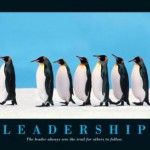
The concept of serving is fundamental to the leadership role. Good leadership involves serving the organization or group and the people within it. Ineffective leaders think that the leader must be served by the people. Leadership is instead an opportunity to give; to serve the people and organization.
Leadership is mainly concerned with people. Leadership also involves decisions and actions relating to all sorts of other things, but leadership is special compared to any other role because of its unique responsibility for people – (i.e., the followers of the leader) .
Leadership and management are commonly seen as the same thing, which they are not. Leadership is also misunderstood to mean directing and instructing people and making important decisions on behalf of an organization. Effective leadership is much more than these.
Good leaders are followed chiefly because people trust and respect them, rather than the skills they possess. Leadership is about behavior and attitude first, skills second.
Here is how leadership is different than management:
• Management is mostly about processes.
• Management relies heavily on tangible measurable capabilities such as effective planning; the use of organizational systems; and the use of appropriate communications methods.
• Leadership is mostly about behavior
• Traits of effective leadership involves many management skills, but generally as a secondary function of true leadership. Leadership instead relies most strongly on less tangible and less measurable things like trust, attitude, decision-making, personal character and inspiration. These are not processes or skills or even necessarily the result of experience. They are enabled mainly by the leader’s character. Humanity is a way to describe these qualities, because this reflects the leader’s important relationship with people.
Below are examples of important leadership qualities:
• honesty and integrity
• humility
• courage
• sensitivity and compassion
• determination
• commitment
• passion
• confidence
• positivity
• wisdom
People with these sort of behaviors and attitudes tend to attract followers. Followers are naturally drawn to people who exhibit strength and can inspire belief in others.
Some people are born more naturally to leadership than others. Most people don’t seek to be a leader, but more people are capable of being leaders than we think. Sometimes they need some coaching/mentoring or a few good role models. Leadership sometimes comes to people later in life but this is not always the case. Many qualities of effective leadership, like confidence and charisma, continue to grow from experience in the leadership role
People who want to be a leader can develop leadership ability. Leadership is a matter of personal conviction and believing strongly in a cause or aim, whatever it is.
Leadership can be performed with different styles. Some leaders have one style, which is right for certain situations and wrong for others. Some leaders can adapt and use different leadership styles for given situations.
People new to leadership (and supervision and management) often feel under pressure to lead in a particularly dominant way. Sometimes this pressure on a new leader to impose their authority on the team comes from above. Dominant leadership is rarely appropriate however, especially for mature teams. Attempting to be overly dominant can then cause problems for a new leader. This will cause resistance from the team, a cycle of negative behaviors and reduced performance. It also prevents a sense of ownership and self-control among the people being led.
Leadership is often more about serving than leading. People tend to respond well to encouragement and recognition. Leaders need to be able to make tough decisions when required, but most importantly leaders should concentrate on enabling the team to thrive, which is actually a ‘serving’ role, not the dominant ‘leading’ role commonly associated with leadership.
Leave A Response